

If your dishwasher is leaving a white residue on your dishes, it’s usually caused by hard water, too much detergent, or improper rinsing. The good news is this is a very common issue and can usually be fixed quickly.
The white film may look chalky, cloudy, or powdery and often appears on glassware the most.
Here’s what typically causes it and how to fix it.
1) Hard Water Buildup
The most common cause is hard water minerals.
When water contains high levels of calcium and magnesium, it can leave behind white deposits after drying.
What to check:
- Do glasses look cloudy even after hand washing?
- Do faucets or showerheads have white buildup?
Fix:
- Use a rinse aid regularly
- Try a dishwasher cleaner designed for mineral buildup
- Consider a water softener if buildup is heavy
Easy Fix for White Residue
Mineral buildup is one of the most common causes of white residue, and a dishwasher cleaner can remove it quickly.


2) Too Much Detergent
Using too much detergent can leave residue behind.
This is common with pods and concentrated formulas.
Fix:
- Use slightly less detergent
- Avoid pre-rinsing dishes excessively (modern detergents need some food particles)
Improve Rinsing Performance
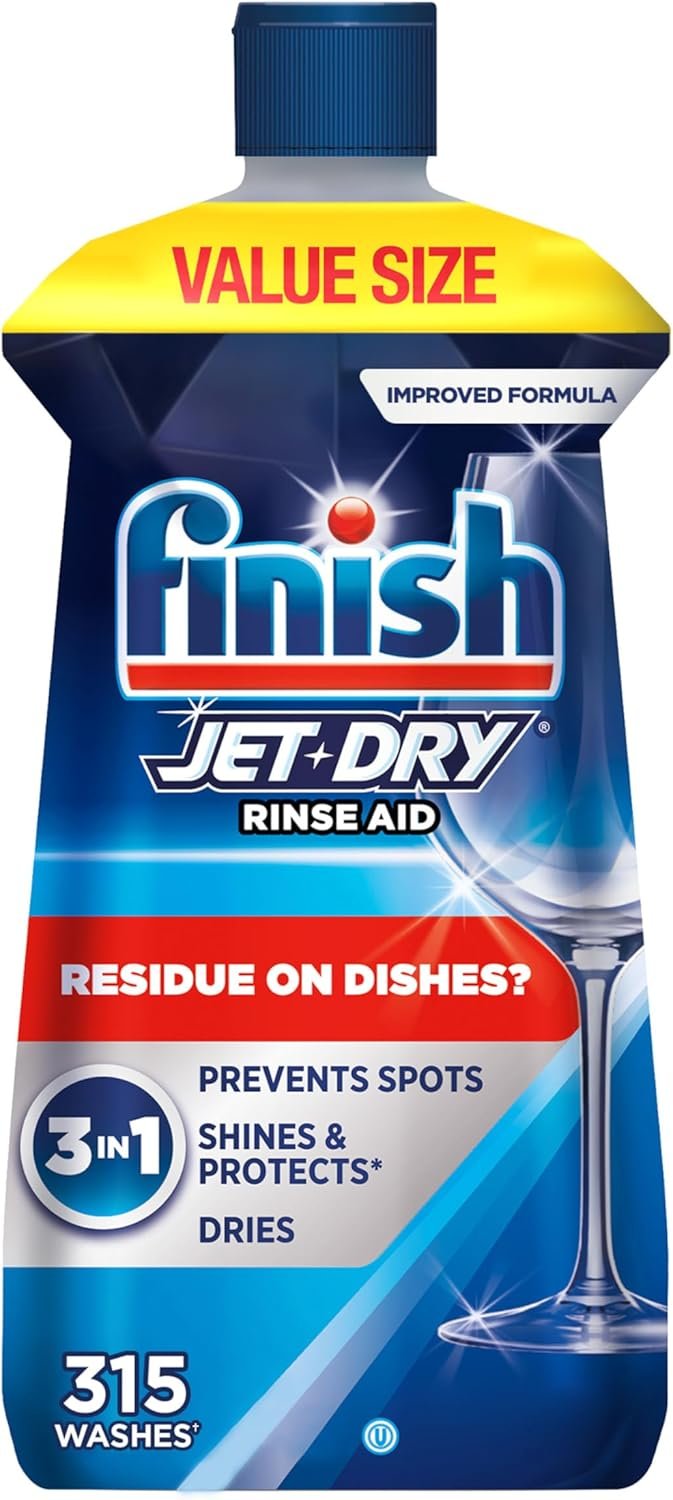
Rinse aid helps prevent mineral deposits from sticking to dishes and can eliminate white residue in many cases.
3) Low Water Temperature
If the water isn’t hot enough, detergent may not dissolve fully.
What to check:
- Run hot water at the sink before starting the dishwasher
- Make sure your water heater is set properly (usually around 120°F)
4) Clogged Spray Arms
Mineral deposits can block spray arm holes.
Fix:
- Remove and rinse spray arms
- Clear holes with a toothpick if needed
5) Old or Worn Heating Element
If dishes stay wet and cloudy, the heating element may not be drying properly.
This is less common but possible.
When It’s Not a DIY Fix
If:
- Dishes stay cloudy even after vinegar cleaning
- Water pressure seems weak
- The dishwasher doesn’t heat water at all
You may need a technician to inspect internal components.
Quick Recap
If your dishwasher leaves white residue, the usual causes are:
- Hard water minerals
- Too much detergent
- Low water temperature
- Spray arm buildup
Most cases are solved with better rinse cycles and cleaning.